


Anxiety
Anxiety Medication
Learn about common side effects, risks, and taking medication responsibly

This therapist directory is offered in partnership with BetterHelp. If you sign up for therapy after clicking through from this site, HelpGuide will earn a commission. This helps us continue our nonprofit mission and continue to be there as a free mental health resource for everyone.
Need to talk to someone now? Find a crisis helpline
If you're a BetterHelp therapist with questions about your directory listing, please contact therapists@betterhelp.com
Does gabapentin help with anxiety? How quickly does it work? Use this guide to explore the effectiveness and safety risks of gabapentin, and decide if it’s the right anxiety medication for you.
Gabapentin is an anticonvulsant medication approved by the FDA to treat neuropathic pain and seizures (and an extended release form of the drug is FDA-approved for restless legs syndrome). Doctors also frequently prescribe gabapentin off-label, which means they use it to treat conditions other than those it was originally approved for. Gabapentin is used off-label so frequently, it has become one of the most widely prescribed medications in the U.S. It may be used for the treatment of chronic pain, alcohol withdrawal, menopausal hot flashes, and anxiety.
When used for anxiety, gabapentin is most often prescribed for social anxiety disorder, panic disorder, or generalized anxiety disorder (GAD). Since it can also help with alcohol and opioid cravings, it may be useful if your anxiety is co-occurring with substance abuse issues. However, research into its effectiveness is limited, so your doctor or psychiatric care provider will likely only suggest this medication after considering more widely researched anxiety medications first.
Gabapentin for anxiety is most commonly sold as generic gabapentin or under the brand name Neurontin in immediate-release form. There are also extended-release forms of the drug sold under the brands Gralise and Horizant, although these are less commonly used off-label for anxiety.
Your doctor may suggest gabapentin as an anxiety treatment if you’ve tried other medications without success, you’ve experienced intolerable side effects from SSRIs and SNRIs, or you have a history of substance abuse which makes using benzodiazepines risky. The more you understand about the effectiveness and safety of gabapentin, the better you and your doctor can decide if it’s a suitable anxiety treatment for you.
Gabapentin mimics a chemical messenger in the brain called GABA (gamma-aminobutyric acid). This can reduce the release of neurotransmitters that overstimulate the nervous system and trigger anxiety, panic, and pain. In this indirect way, gabapentin can boost GABA concentrations which have a calming effect on the brain. Over time, it may ease anxiety symptoms, helping you feel less on edge, easing physical tension, improving sleep, and even reducing the frequency of panic attacks.
It’s important to remember that easing anxiety may not be as simple as boosting GABA levels. While medical researchers have identified GABA as playing a role in anxiety, other factors also contribute to anxiety symptoms. Your family history, brain function, lifestyle, and other environmental factors can play a part in causing your anxiety symptoms. More research is still needed to determine the exact role and effectiveness of gabapentin as an anxiety treatment.
Talkspace offers affordable mental health care plans—and also accepts insurance. Take their assessment to get matched with a licensed therapist or psychiatrist and schedule your first session. Use special offer code HELPGUIDE85 for $85 off.
Take Assessment HelpGuide is a user-supported nonprofit. We earn a commission if you sign up for Talkspace’s services after clicking through from this site. Learn moreGabapentin is only available in the U.S. with a prescription. Your health care provider may vary your dosage according to your age, medical history, and other medications you’re taking, as well as the type of anxiety being treated.
The typical gabapentin dosage for anxiety as an off-label medication is 300 to 3600mg per day. In one study that showed positive results, breast cancer survivors with anxiety were given 300 or 900mg of gabapentin per day. Other research suggests that gabapentin may be effective for social anxiety and panic disorders at a daily dose of 900mg or more.
Taken orally, gabapentin takes several hours for the body to absorb. That means it’s unlikely to be useful for as-needed anxiety relief. When taken as a daily medication, it may take you several weeks to see an improvement in your anxiety levels. In the study of breast cancer survivors with anxiety, those taking gabapentin reported an improvement in their symptoms after four weeks.
Common side effects of gabapentin are usually mild and often disappear once your body gets used to the medication. These include:
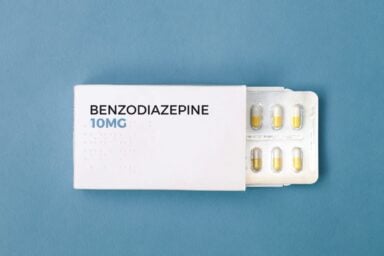
Gabapentin doesn’t carry the same risk of abuse or dependence as benzodiazepines, another commonly used medication to treat anxiety. However, gabapentin can interact with alcohol and other medications such as NSAIDs. The U.S. Food and Drug Administration (FDA) has also warned that serious breathing difficulties may occur in elderly patients using gabapentin or those who:
Less common but serious side effects can also occur with gabapentin. Seek medical help right away if you experience:
To safely use gabapentin, it’s important to follow the medical guidelines of your prescriber. Tell your prescriber about other medical conditions you have-–such as liver or kidney disease—and other medications that you take.
Your provider will aim to establish the lowest effective dose so it may take some experimenting to find the dose that’s right for you. Do not abruptly stop taking gabapentin without talking to your doctor first, as this may cause withdrawal symptoms such as worsening anxiety, insomnia, and sweating.
Gabapentin is not considered a first-choice anxiety medication. It’s often only prescribed if you’ve already tried alternatives such as:
Most of these anxiety medications can be prescribed by in-person or online medical providers. To help you find a prescriber online, read our reviews of the top online psychiatry platforms.
Therapy for anxiety disorders can be very effective in overcoming your anxiety symptoms and regaining control of your life. Cognitive behavioral therapy (CBT) and exposure therapy are the most common approaches and can be practiced in-person or online. To find an online therapy platform that best fits your needs, take a look at our picks of the best online therapy services.
In therapy you’ll learn strategies for lowering your anxiety levels, calming your mind, and overcoming your fears. Some of these techniques you can practice yourself whenever you start to feel anxious.
Last updated or reviewed on November 6, 2025Learn about common side effects, risks, and taking medication responsibly
Cognitive behavioral therapy, exposure therapy, and other options

Lexapro (escitalopram) is an FDA-approved medication for long-term anxiety treatment. Learn more about how this medication works and its side effects.

Millions of readers rely on HelpGuide.org for free, evidence-based resources to understand and navigate mental health challenges. Please donate today to help us save, support, and change lives.
Donate to HelpGuide.org today